


Website not generating leads is one of the biggest challenges facing Australian small businesses today.If your website is not generating leads, you’re not alone. Many Australian businesses invest in professional websites expecting more enquiries, only to find that visitors leave without taking action. You may have invested thousands of dollars into a sleek, modern website, expecting the phone to ring and the enquiry inbox to fill up. Instead, there is total silence.
If this sounds familiar, you are far from alone. The harsh reality for Australian Small and Medium Enterprises (SMEs) is that most business websites operate as expensive, digital brochures rather than lead-generation machines. They focus heavily on company credentials and aesthetic flair instead of directly addressing customer problems and guiding user action.
In an increasingly competitive local market, an underperforming website is costing you more than just digital pride—it is actively draining your marketing budget.
This comprehensive guide breaks down the exact reasons why your website is failing to convert visitors into paying clients, provides verified Australian industry benchmarks to measure your performance, and delivers a step-by-step framework to transform your site into an automated lead generator.
The Hard Numbers: Australian Digital Marketing Benchmarks (2025–2026)
Before diving into technical fixes, you need to understand what a successful online presence looks like in the current Australian landscape. If you do not know your numbers, you cannot measure your growth.
According to aggregated SME marketing datasets, overall digital conversion rates across the country hover between 2% and 5%. If fewer than 2 out of every 100 visitors are reaching out to your business, your digital infrastructure has a leak.
Furthermore, acquiring those visitors requires significant financial investment. Rising competition has pushed monthly SEO commitments for local businesses to between $1,500 and $5,000, while pay-per-click options like Google Ads command a high Cost-Per-Click (CPC) ranging from $5 to $15 per click.
When you factor in these acquisition costs, your baseline Cost Per Lead (CPL) varies wildly depending on your sector. The table below outlines what a typical Australian business should expect to pay for a qualified enquiry.
Cost Per Lead (CPL) Benchmarks by Australian Industry
| Industry Sector | Expected Cost Per Lead (CPL) Range | Primary Conversion Channels |
| Professional Services (e.g., Accountants, Lawyers, Consultants) | $60 – $180 | Organic SEO, Content Clusters, LinkedIn |
| Healthcare & Medical (e.g., Dental, Physio, Local Clinics) | $50 – $150 | Local SEO, Google Business Profiles, Direct Bookings |
| Home Services / Tradies (e.g., Plumbers, Electricians, Builders) | $40 – $120 | Google Ads, Local Service Searches, Click-to-Call |
The Cost of Friction: If you are running a plumbing business in Sydney paying a $12 CPC, and your website converts at a dismal 0.5% instead of the 4% industry standard, you are spending hundreds of dollars more than your competitors just to secure a single phone call. Fixing your website is the fastest way to slash your CPL.
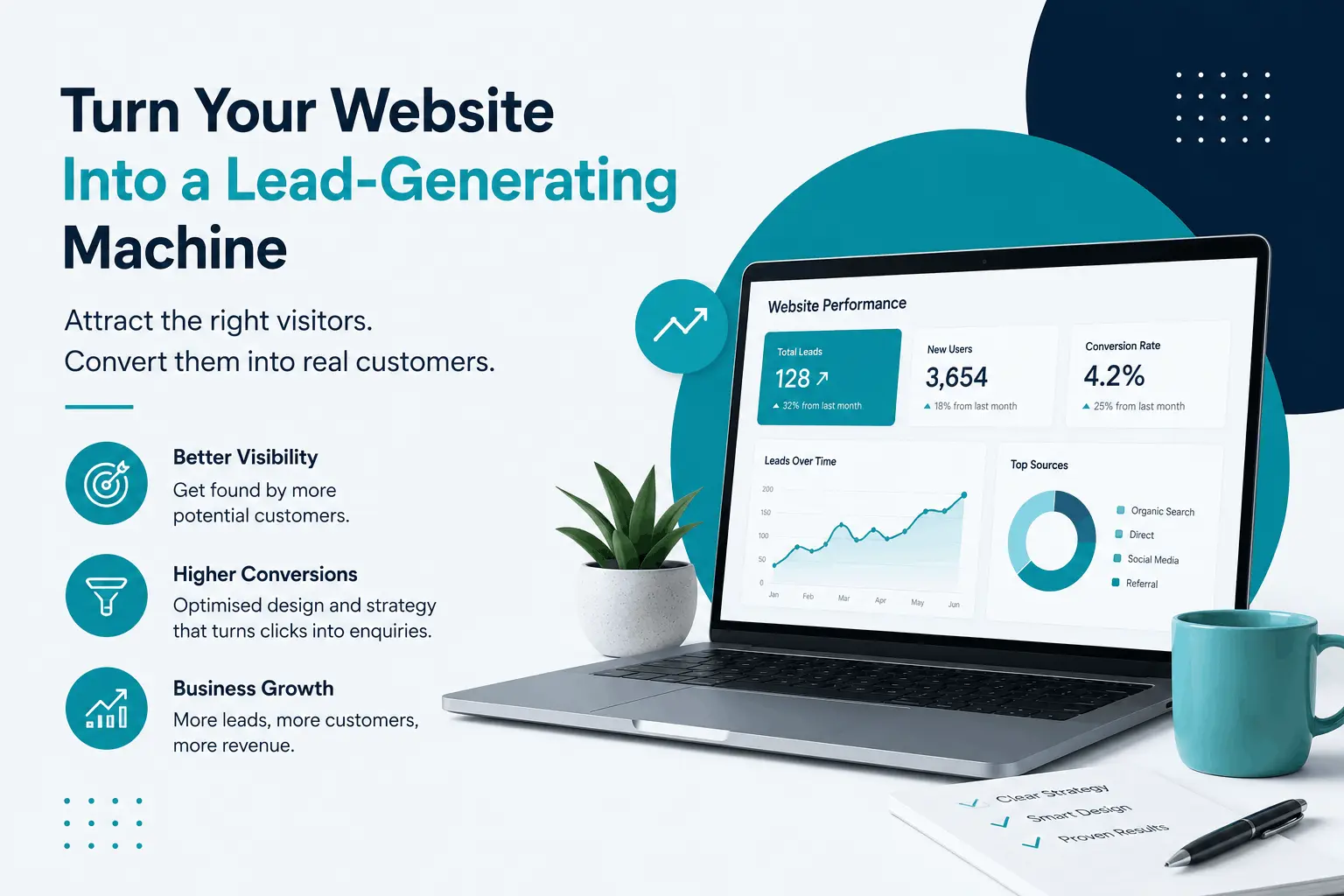
6 Reasons Your Website Is Not Generating Leads
To turn your website around, you must first diagnose where the user journey breaks down. Six core vulnerabilities routinely sabotage Australian business websites.
1. The “Brochureware” Trap
Most business owners build websites that talk entirely about themselves: when they were established, how many trucks they own, or a long list of abstract values. Your prospective clients do not care about your history yet; they care about their own problems. When a page fails to immediately state what you do, who you do it for, and how it solves the reader’s pain point, visitors hit the back button within seconds.
2. Invisible or High-Friction Call-to-Actions (CTAs)
If a user has to scroll to the very bottom of your page or hunt through a cluttered footer to find your phone number or contact form, you have already lost them. Similarly, asking for too much information too early destroys conversion rates. Forcing a user to fill out an 8-field form just to get a basic callback creates massive friction.
3. Sluggish Mobile Performance
With the vast majority of local searches occurring on smartphones, mobile optimization is no longer optional. Slow mobile site speed directly suppresses lead generation. If your images are uncompressed or your hosting is weak, your mobile load times balloon, causing local search users to abandon your site before it even renders.
4. Absent Social Proof and Local Trust Signals
Australian consumers are naturally skeptical. They want to know you are a legitimate, reliable local provider before handing over their contact details. A complete lack of real client reviews, local case studies, or clear trust badges leaves your site looking like an unverified, generic digital shell.
5. Broken Tracking and Measurement
You cannot optimize what you do not track. A startling number of Australian micro-businesses and SMEs operate with completely missing or misconfigured Google Analytics, broken conversion tracking, and zero insight into how users behave on-site. Without clear data, you are simply guessing which marketing channels are working.
6. Budget Stretches and Low Digital Literacy
Many tradies and micro-SME owners treat a website as a one-off, flat-rate expense. They buy a cheap, unoptimized template, under-invest in ongoing Conversion Rate Optimisation (CRO), and then wonder why the investment yields no return. A website requires continuous refinement to keep pace with changing consumer expectations.
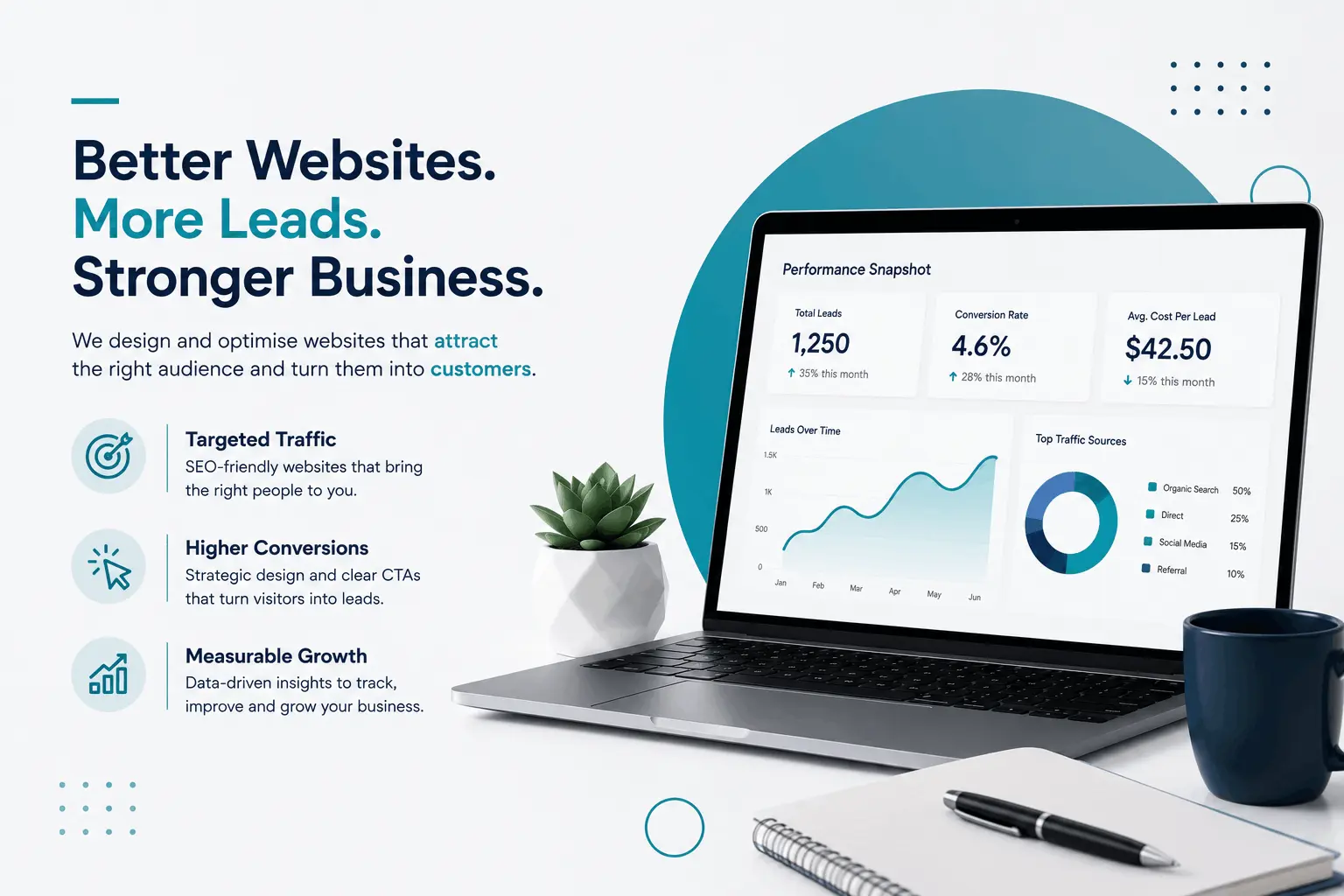
Case Study: Small Structural Fixes, Massive Revenue Gains
To see how these principles work in the real world, consider this comparative scenario based on standard Australian SME optimization turnarounds.
The Melbourne Tradie Website Transformation
The Before State: A local Melbourne trade services website was experiencing an average conversion rate of just 0.8%. The homepage featured a massive, generic image of a construction site, a dense paragraph about the company’s 20-year history, a phone number hidden away on a dedicated “Contact Us” page, and an inquiry form that demanded 8 separate fields of information (including a detailed description and file uploads).
The Strategic Interventions:
Clarified the hero message above the fold to state exactly what services they offer and which Melbourne regions they service.
Embedded two prominent, authentic client testimonials directly on the homepage.
Moved a large, clickable phone number button to the top right of the permanent header layout.
Slashed the contact form down from 8 fields to just 3 essential inputs: Name, Phone, and Service Required.
The After State: Following these low-cost adjustments, the website’s conversion rate surged to 3.6%.
Without spending an extra dollar on advertising or traffic acquisition, the business more than quadrupled its weekly inbound lead volume simply by removing user friction.
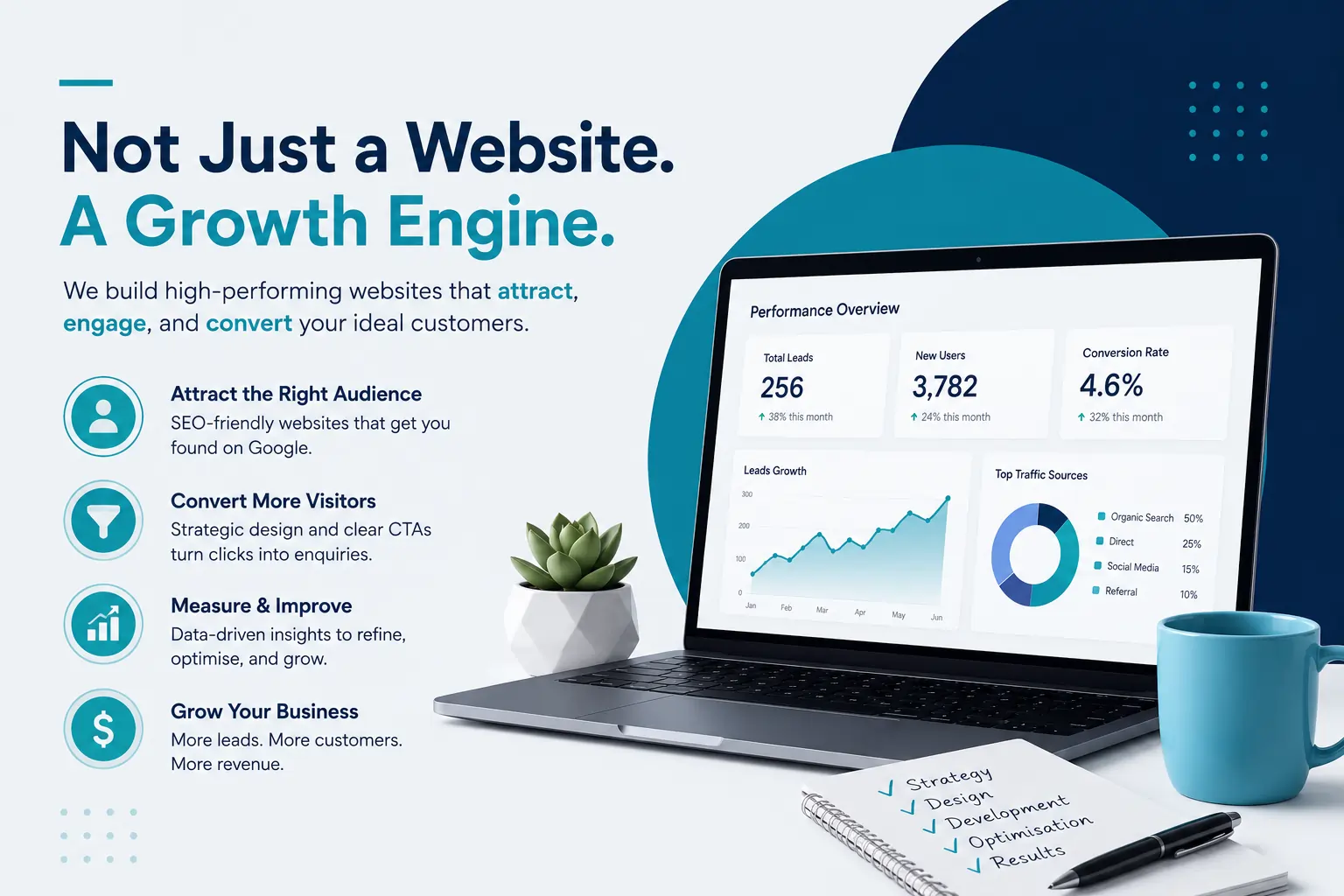
How to Fix a Website That Is Not Generating Leads
Transforming your website does not require an expensive, top-to-bottom redesign. Implement these grouped fixes sequentially to systematically eliminate friction and build authority.
Phase 1: Immediate Quick Wins (Low Effort)
Clarify Your Value Proposition
The very first sentence your visitors read must pass the “3-Second Test.” Within three seconds of landing on your page, a user must understand exactly what you offer and how it benefits them. Frame your messaging around solutions, not features.If your business needs a website built specifically to convert Australian visitors into customers, explore our solutions.
Place Prominent, Low-Friction CTAs
Ensure your primary action step—whether it is “Book a Free Quote,” “Call Now,” or “Schedule Consultation”—is pinned clearly in your top header navigation and repeated clearly throughout your content blocks. Keep your primary initial contact forms incredibly brief; stick to a maximum of 4 fields for first contact to maximize volume.
Phase 2: Building Trust and Local Credibility (Medium Effort)
Leverage Verified Local Reviews
Data indicates that local consumer review behavior is heavily research-driven. 74% of consumers use at least two review platforms when researching local businesses. Do not hide your feedback. Embed active, verified Google Business Profile or ProductReview reviews right on your primary landing pages.
Deploy Highly Localized Proof Points
To capture hyper-targeted local searches, you need to showcase project case studies from specific geographic areas. Instead of stating you offer services generally, build tailored pages or case studies highlighted by location, such as “Recent Residential Project in Sydney” or “Commercial Fit-out in Brisbane.” This regional proof dramatically enhances local trust and relevancy.
Phase 3: Technical and Performance Optimisation (High Effort)
Crush Mobile Site Speed Deadlines
According to official Google mobile-first documentation, your pages should aim to load fully on mobile connections in under 3 seconds. To achieve this, use compression tools to shrink heavy image sizes, eliminate render-blocking script errors, and ensure your site scores highly on Google PageSpeed Insights.
Structural Site Architecture and Internal Linking
Help both search engines and human visitors navigate your digital ecosystem with an intentional internal linking strategy. link your main industry service pages directly to your real-world outcomes.
For example, a trade business should link from its primary Tradie Web Design service page over to a Tradie SEO resource, which then links directly to an established Tradie Case Study. Additionally, construct a dedicated “Results Hub” gathering all testimonials, reviews, and concrete ROI metrics into one place, and interlink this hub directly from your homepage and service footers where purchase decisions happen.
Optimization Checklist for Australian SMEs
Run your website through this practical audit framework using free digital tools to check if your site hits critical performance thresholds.
1. Mobile Performance Audit
Tool: Google PageSpeed Insights / Google Search Console
Target Threshold: Full mobile page load time under 3 seconds.
Action: Compress large image blocks, utilize modern image formats, and clear out unused code scripts.
2. Layout & Friction Audit
Tool: Hotjar (Visual Heatmaps & Session Recordings)
Target Threshold: Primary CTA visible without scrolling; initial form length restricted to $\le$ 4 input fields.
Action: Remove non-essential fields like “How did you hear about us?” from initial forms. Move your main phone number to the prominent top right header.
3. Credibility & Content Audit
Tool: Manual Review
Target Threshold: Minimum of 2 authentic client reviews or testimonials showcased on the homepage; clear local trust signals visible.
Action: Embed a live Google Review widget or add high-quality screenshots of real client recommendations.
4. Technical Search Signals
Tool: Schema Markup Validator / Google Search Console
Target Threshold: Correct deployment of Local Business Schema and active FAQ Schema for targeted search queries.
Action: Inject clean structured data markup to help search engines accurately read your operational hours, physical location, and core service structures.
Connecting the Pipes: Post-Lead Systems & Nurturing
Getting a user to fill out your form is only half the battle. If your internal response framework is broken, your marketing dollars are completely wasted. Lead capture without swift, strategic follow-up yields zero return on investment.
Many Australian SMEs suffer from slow response times, often taking 24 to 48 hours to respond to an online enquiry. In the digital economy, this delay is fatal. If a prospect is looking for a local service provider, they will simply move down the Google search results page to the next business that answers the phone or replies instantly via email.
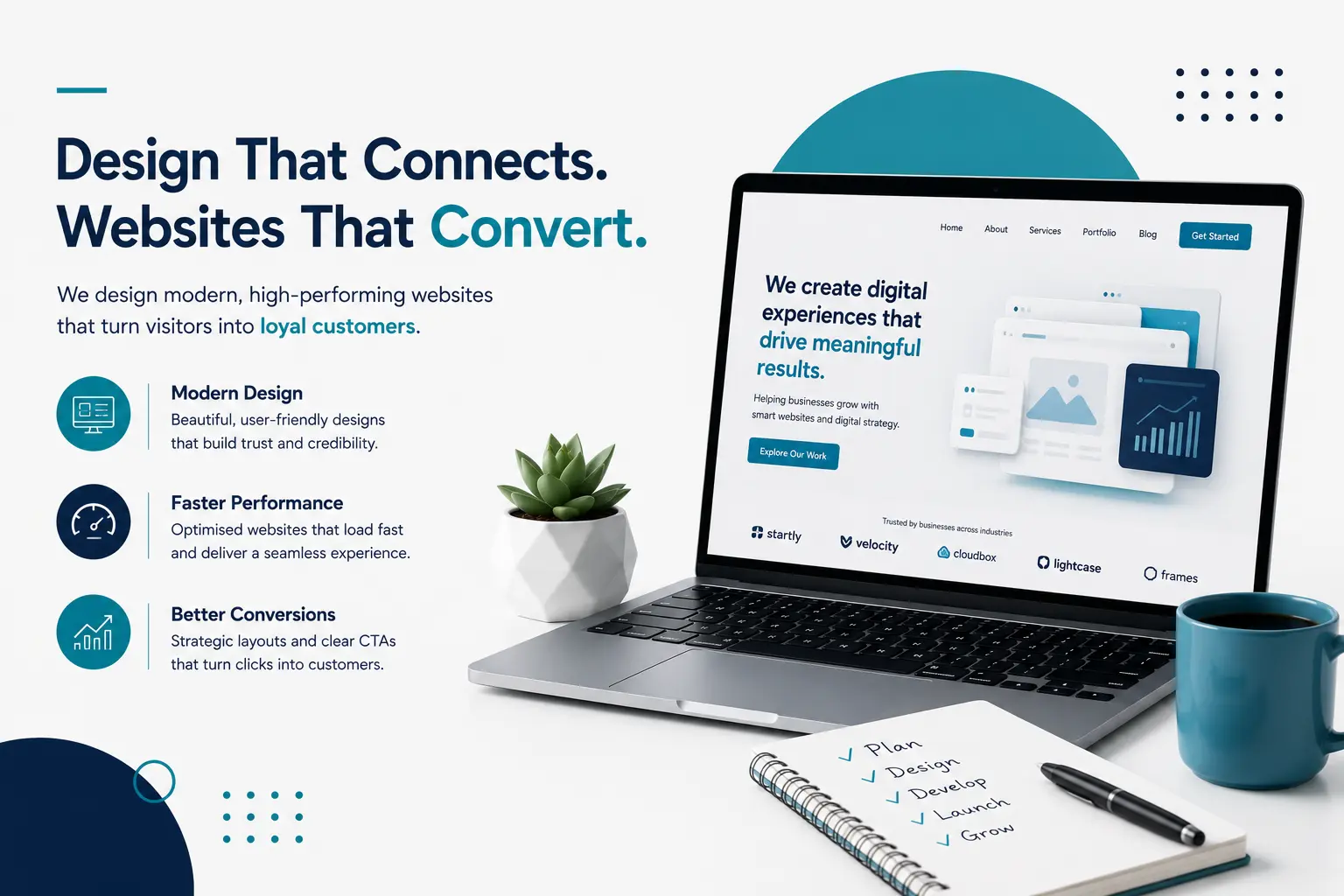
The Conversion Engine
To maximize your website spend, integrate your contact forms directly with a modern Customer Relationship Management (CRM) platform like HubSpot, Salesforce, or industry-specific tools. This ensures that the moment an enquiry lands:
An automated text message or email notification goes straight to your team for immediate callback tracking.
The prospect receives an instant, professional confirmation email setting expectations for when they will be contacted.
The prospect enters an automated email nurturing sequence.
Do not discount the power of email. Across Australian SME benchmarks, email marketing ROI remains incredibly high, delivering an estimated 36:1 to 42:1 return on investment with stable average open rates sitting comfortably between 18% and 28%. Nurturing unconverted leads via educational email content keeps your business top-of-mind for when they are finally ready to buy.
Compliance Note for Healthcare and Medical Clinics
If you operate an Australian medical practice, healthcare facility, or allied health clinic, your online forms must meet strict regulatory bars. Under Australian Government privacy legislation and Australian Health Practitioner Regulation Agency (AHPRA) digital guidelines, patient onboarding portals, booking forms, and enquiry systems must maintain absolute data privacy compliance.
Ensure your medical website uses secure, encrypted booking software rather than open, unencrypted email contact forms to handle sensitive patient data safely.
Frequently Asked Questions
Why is my website getting traffic from Google but zero phone calls or form enquiries?
This is almost always a symptom of poor messaging, hidden Call-to-Actions (CTAs), or a lack of trust signals. If users find you through search but leave without contacting you, your site failed to convince them within the first few seconds that you understand their problem, operate locally, or possess the credibility to deliver a solution. High friction, such as overly long contact forms or a slow-loading mobile layout, also drives these drop-offs.
What baseline conversion rate should an Australian small business expect?
A healthy digital marketing campaign for an Australian SME generally targets an overall digital conversion rate of 2% to 5%. This means for every 100 targeted visitors arriving on your site, you should expect 2 to 5 qualified enquiries (such as form completions, direct emails, or phone calls). If your current metrics sit below 2%, your site has optimization issues that need addressing.
Does mobile page speed really affect how many leads my business gets?
Yes, dramatically. Local mobile searchers want quick answers. If your website takes longer than 3 seconds to load on a smartphone, a significant percentage of those visitors will back out and click on a competitor’s link instead. Google’s mobile-first indexing also penalizes slow websites, meaning poor speed reduces both your search visibility and your on-site conversion rates.
Should I pay for a complete website redesign, or can I fix my existing site?
You rarely need to throw out your entire website to fix your lead generation problems. Most conversion drops can be resolved by executing focused, tactical improvements: rewording your main headings, shortening your forms, moving your phone number to the header, adding verified customer reviews, and compressing your images to boost speed. Try executing a DIY audit and applying these quick wins before committing to an expensive total redesign.
Why is my website not generating leads?
A website not generating leads often suffers from poor user experience, slow performance, weak calls to action, or ineffective SEO. By improving website speed, content, trust signals, and conversion-focused design, you can attract more enquiries and generate better business results.
Take the Next Step Toward Higher Conversions
An underperforming website is a leaking pipe in your business revenue. Every day you leave your value proposition muddled, your forms too long, and your mobile load speeds slow, you are handing qualified local leads directly to your competitors.
By streamlining your user experience, displaying solid local proof, and setting up rapid follow-up tracking systems, you can turn your website from a quiet digital brochure into an active sales driver.
Looking to generate more qualified leads from your website? Explore our website development and digital marketing solutions for Australian businesses.